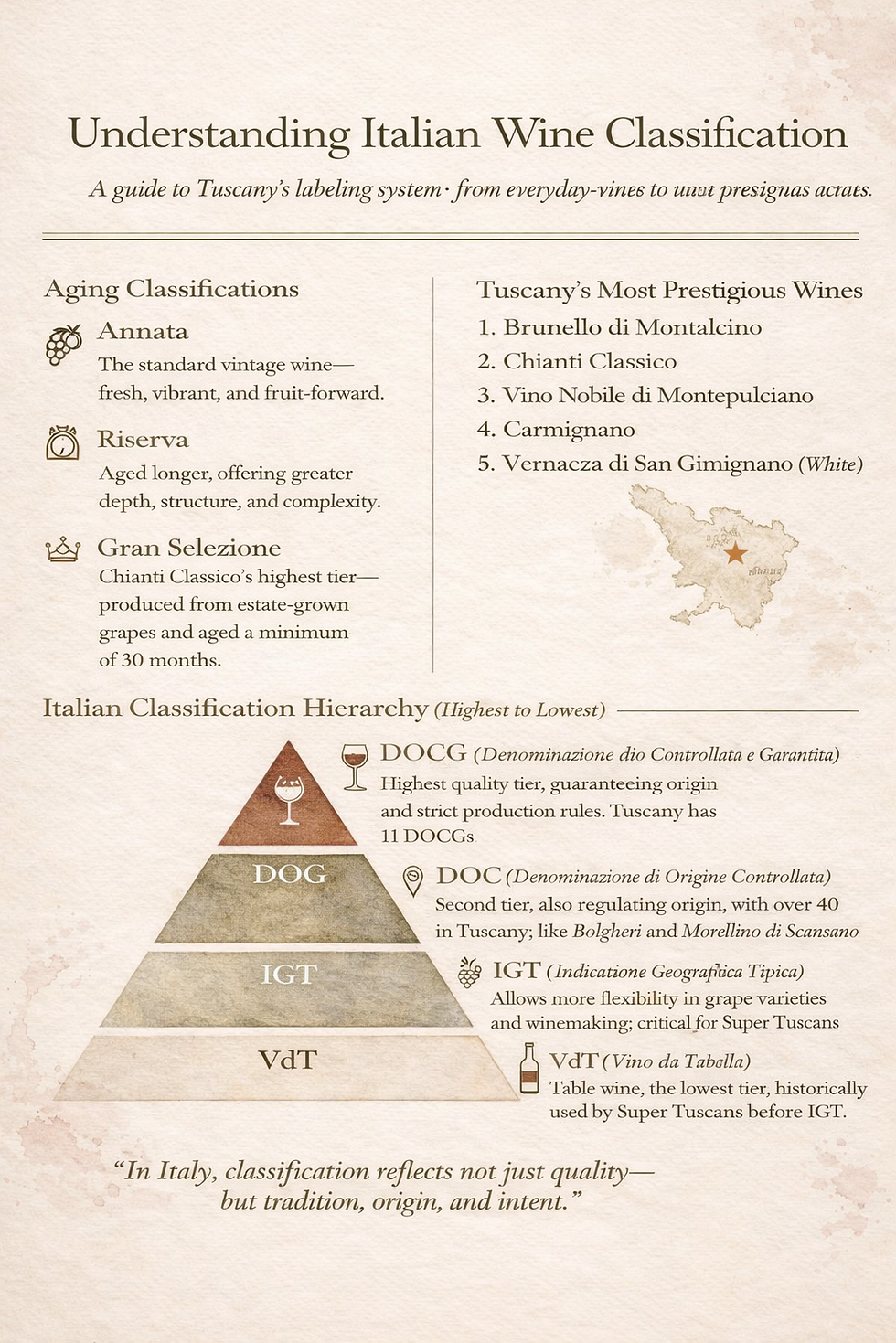
Understanding Italian Wine Classification
Sangiovese: The star grape, creating deep, savory reds with high acidity and tannins.
Chianti & Chianti Classico: Iconic, food-friendly reds from Sangiovese, with Classico being the historic heartland.
Brunello di Montalcino: A powerful, age-worthy 100% Sangiovese wine from Montalcino.
Vino Nobile di Montepulciano: Another top Sangiovese-based red, known for its elegance.
Super Tuscans: Innovative blends, often featuring Sangiovese with international grapes (Cabernet, Merlot, Syrah) for a richer style (e.g., Sassicaia, Tignanello).
Vernaccia di San Gimignano: Tuscany's most famous crisp, dry white wine.
Vin Santo: A traditional sweet dessert wine, often enjoyed with biscotti.
Tuscany’s quality hierarchy tells you how long a wine has been aged and the level of selection involved:
Annata – the standard vintage wine, fresh and fruit-forward.
Riserva – aged longer, with added depth and complexity.
Gran Selezione – Chianti Classico’s top tier, crafted from the estate’s best grapes and aged for at least 30 months.
Italian Classification Hierarchy (Highest to Lowest)
Brunello di Montalcino
Chianti Classico
Vino Nobile di Montepulciano
Carmignano
Vernaccia di San Gimignano (White)
DOCG (Denominazione di Origine Controllata e Garantita): Highest quality tier, guaranteeing origin and strict production rules. Tuscany has 11 DOCGs, including:
DOC (Denominazione di Origine Controllata): Second tier, also regulating origin, with over 40 in Tuscany, like Bolgheri and Morellino di Scansano.
IGT (Indicazione Geografica Tipica): Allows more flexibility in grape varieties and winemaking, crucial for Super Tuscans.
VdT (Vino da Tavola): Table wine, the lowest tier, historically used by Super Tuscans before IGT
Types of Wine
Aging Classification
Italian Classification Hierarchy