


Tuscany Wine Explained: What to Know Before Visiting Tuscany’s Wineries

You don't need to know wine to enjoy Tuscany.
You don't need to understand tannins, memorize vintages, or know the difference between French and Slovenian oak. And you certainly don't need to swirl your glass while pretending you can smell something you can't.
But knowing just a little about Tuscan wine before you arrive can completely change the experience.
Suddenly, Brunello isn't simply an expensive bottle on a tasting menu. Chianti and Chianti Classico aren't interchangeable. The words Riserva and Gran Selezione begin to mean something. And when someone in Montepulciano tells you that the wine in your glass is made primarily from Prugnolo Gentile, you won't wonder whether you've somehow stopped drinking Sangiovese.
You haven't.
Think of this as Tuscan wine education without the textbook—just enough information to make your winery visits more interesting, your tastings more meaningful, and choosing where to go considerably easier.
And the best place to start is with one grape.
Sangiovese: The Grape Behind Tuscany
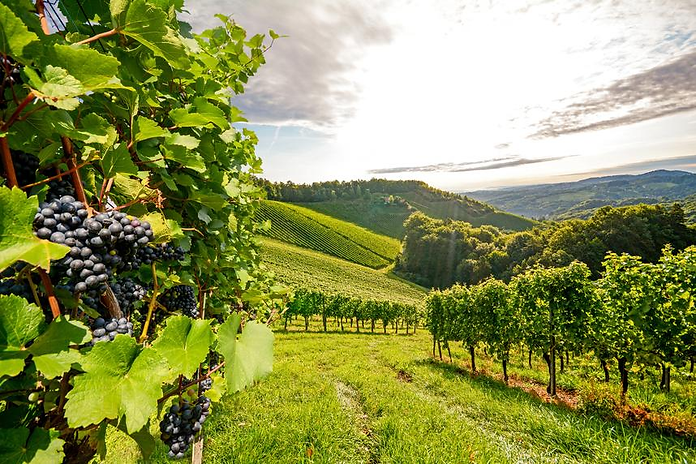
If you're going to remember the name of one grape before traveling through Tuscany, make it:
Sangiovese.
It is the common thread running through many of Tuscany's most famous red wines.
Drive through Chianti Classico and you'll drink Sangiovese. Continue south to Montalcino and you'll drink it again. Head east toward Montepulciano and there it is once more—although the locals traditionally call it Prugnolo Gentile.
What's fascinating is how different the wines can taste.
Brunello di Montalcino must be made entirely from Sangiovese. Vino Nobile di Montepulciano requires at least 70% Sangiovese, while Chianti Classico requires at least 80% and may be made from 100%.
That's what makes traveling through Tuscany so much more interesting than simply buying these wines at home.
You're essentially following Sangiovese across the countryside.
One day you're drinking a lively Chianti Classico overlooking vineyards near Greve or Panzano. A few days later you're sitting outside a winery near Montalcino with a powerful Brunello. Then you're underground in an ancient cellar beneath Montepulciano tasting Vino Nobile.
Same grape family. Different soils. Different elevations. Different rules. Different winemakers. Completely different experiences.
What Does Sangiovese Taste Like?
There's no single answer—and that's part of the fun.
You may notice:
cherry, red berries, dried herbs, violets, earth, leather, spice or tobacco.
Young Sangiovese can feel bright and lively. Older or more seriously aged wines can become deeper, softer and considerably more complex.
But don't spend your vacation worrying about whether you're identifying the "correct" flavor.
Instead, compare.
Taste Sangiovese in Northern Chianti. Then Mid Chianti. Then Southern Chianti. Taste it again in Montalcino and Montepulciano.
You'll begin recognizing differences without anyone having to teach you.
That's the best wine class in Tuscany.
Brunello vs. Vino Nobile vs. Chianti Classico: What's the Difference?

This is probably the most useful wine lesson to understand before planning a Tuscany winery trip.
All three are prestigious Tuscan DOCG wines. All three revolve around Sangiovese.
But they aren't the same wine.
Brunello di Montalcino
Where: Montalcino Primary grape: 100% Sangiovese Local Sangiovese name: Brunello Personality: Powerful, structured and built for aging
Brunello can only be produced within the territory of Montalcino and must be made entirely from Sangiovese. Current regulations require at least two years of aging in wood, and Brunello cannot be released until the fifth year calculated from the harvest year. Riserva requires another year before release.
That helps explain something you'll notice immediately when visiting Montalcino:
Brunello isn't in a hurry.
Neither are many of its producers.
Tastings here can feel more deliberate. You'll often taste a younger Rosso di Montalcino before moving into Brunello, followed perhaps by a Riserva or older vintage.
For travelers, that progression is one of the best ways to understand what aging does to Sangiovese.
Vino Nobile di Montepulciano
Where: Montepulciano Primary grape: Minimum 70% Sangiovese Local Sangiovese name: Prugnolo Gentile Personality: Elegant, balanced and wonderfully food-friendly
Here's an important point:
Vino Nobile di Montepulciano is not made from the Montepulciano grape.
The name refers to the town of Montepulciano in Tuscany.
Sangiovese—traditionally called Prugnolo Gentile here—must account for at least 70% of Vino Nobile. The wine requires at least two years of maturation; Riserva requires at least three years, including at least six months in bottle.
Montepulciano is particularly fun for wine travelers because you can experience both countryside estates and historic cellars associated with the hill town.
It's wine, architecture and Tuscan history wrapped into the same day.
Chianti Classico
Where: Historic Chianti territory between Florence and Siena Primary grape: Minimum 80% Sangiovese Symbol: Black Rooster — Gallo Nero Personality: Bright, savory, versatile and unmistakably Tuscan
Chianti Classico may contain between 80% and 100% Sangiovese. Other permitted red varieties can make up the remainder.
This is the wine you'll encounter repeatedly while exploring our Northern, Mid and Southern Chianti winery regions.
And because there are so many producers, it's an extraordinary place to learn.
You can taste polished wines at grand estates and castles, then drive a short distance and taste Sangiovese with a family whose connection to the land stretches back generations.
That's one reason we recommend tasting at different types of wineries, not simply famous ones.
Chianti vs. Chianti Classico: They're Not the Same Thing
This may be Tuscany's most common wine misunderstanding.
Chianti and Chianti Classico are not simply two quality levels of the same wine.
They're separate appellations with different geographical boundaries and production regulations. Chianti Classico became an autonomous DOCG in 1996.
The historic Chianti Classico territory lies between Florence and Siena. Its wine-growing history was formally recognized as far back as 1716, when Grand Duke Cosimo III de' Medici defined boundaries for the historic Chianti wine-producing territory.
Chianti DOCG covers a much larger area of Tuscany.
The Easy Way to Remember
When you're standing in a wine shop trying to remember everything you read before your trip:
Look for the Black Rooster.
The Gallo Nero appears on every bottle of Chianti Classico.
It's one of the easiest wine labels to recognize once you know what you're looking for.
And after several days driving through Chianti, you'll probably start spotting that rooster everywhere.


What Is a Super Tuscan—and Where Should You Taste One?

Super Tuscan" is an informal term, generally associated with innovative Tuscan wines that historically stepped outside the traditional appellation rules.
Beginning in the latter half of the twentieth century, some Tuscan winemakers started experimenting with different grape combinations and international varieties such as Cabernet Sauvignon, Cabernet Franc and Merlot.
Some of the resulting wines were extraordinary—but didn't conform to the established appellation regulations of their time.
American wine writer Burton Anderson is widely credited with coining the term "Super Tuscan" in the early 1980s. However, historians note that exact authorship of the moniker remains slightly debated among wine authorities
Famous examples include Sassicaia, Tignanello and Ornellaia. Sassicaia's first commercial vintage was 1968, while Tignanello became another landmark wine by combining Sangiovese with Cabernet and operating outside the traditional rules of its era.
The irony was wonderful:
Some of Tuscany's most ambitious and expensive wines once carried humble table-wine classifications.
Eventually the Italian classification system evolved, and Toscana IGT became an important home for many wines made outside traditional DOC/DOCG formulas.
Where Should You Taste Super Tuscans?
If you're following the regions in our Tuscany winery guide, Chianti is an excellent place to explore them.
Ask wineries whether they produce a Toscana IGT wine alongside their Chianti Classico. Comparing the two at the same estate can be fascinating.
You may taste traditional Sangiovese first, then a wine containing Cabernet Sauvignon or Merlot from vineyards only a short distance away.
For travelers willing to venture farther west, Bolgheri and the Tuscan coast are also closely associated with the Super Tuscan story.
Don't worry about memorizing famous labels.
Ask the person pouring your wine:
"Do you make an IGT or Super Tuscan-style wine?"
That single question can lead to one of the most interesting pours of the tasting.
What Is Vernaccia di San Gimignano?

After several days of Tuscan reds, San Gimignano has a surprise waiting for you.
White wine.
And not just any white wine.
Vernaccia di San Gimignano is one of Tuscany's historic wines.
Its documented history stretches back to the Middle Ages. In 1966, Vernaccia di San Gimignano became the first Italian wine to receive DOC status. It received DOCG recognition in 1993.
Today, Vernaccia di San Gimignano DOCG must contain at least 85% Vernaccia di San Gimignano, and the grapes must come from the municipality of San Gimignano.
What Does Vernaccia Taste Like?
Expect something very different from the big reds you may have been drinking.
Vernaccia is typically dry and refreshing, with floral and fruit notes when young and a distinctive savory, mineral character. With age, it can develop greater complexity and characteristic mineral notes.
Try it with a winery lunch, local cheese, pasta, seafood or simply while looking across the vineyards toward San Gimignano's medieval towers.
There's something especially memorable about drinking a wine that has belonged to this landscape for centuries while looking at essentially the same skyline generations of winegrowers saw before you.
And don't automatically skip the Vernaccia Riserva.
Riserva must age for at least 11 months, including at least three months in bottle, and can show just how serious and age-worthy this Tuscan white can become.

Understanding DOCG, DOC and IGT Without the Confusion
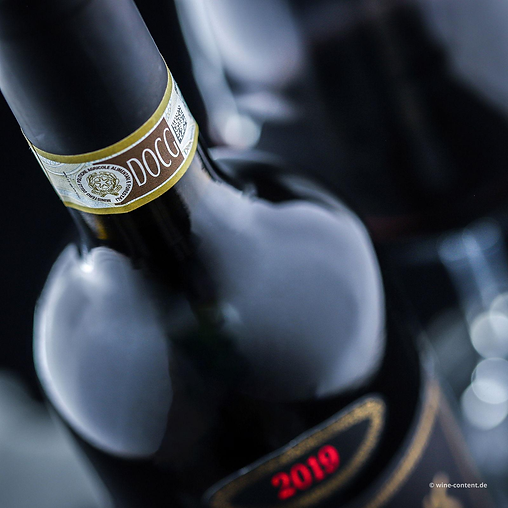
Italian wine labels can initially look like somebody printed the alphabet on them.
DOCG.
DOC.
IGT.
The easiest way to understand them is not as a ranking of whether you'll personally like the wine, but as sets of rules connecting a wine to its origin and production requirements.
DOCG — Denominazione di Origine Controllata e Garantita
These wines operate under detailed rules concerning things such as geographical origin, permitted grapes, yields, production and aging.
Examples you'll encounter throughout your Tuscany travels include:
Brunello di Montalcino DOCGVino Nobile di Montepulciano DOCGChianti Classico DOCGVernaccia di San Gimignano DOCG
DOC — Denominazione di Origine Controllata
DOC wines also follow geographic and production regulations, although they're governed under a different designation level.
Don't assume DOC automatically means "inferior wine."
For travelers, one of the best examples is Rosso di Montalcino DOC.
It's made from the same Sangiovese grape as Brunello but is designed for earlier release. That makes tasting Rosso alongside Brunello at the same winery particularly educational.
IGT — Indicazione Geografica Tipica
Here's where things become fun.
IGT generally gives producers greater flexibility than DOC/DOCG rules regarding grape varieties and winemaking choices while still connecting the wine to a geographical area.
That flexibility is part of the story behind many wines associated with the Super Tuscan movement.
The Important Lesson
DOCG doesn't automatically mean you'll like the wine more than an IGT.
Classification tells you about origin and rules.
Your glass tells you whether you want another glass.
Trust the glass.
Riserva, Gran Selezione and Annata: What Do They Mean?

You'll encounter these words constantly at wineries.
Fortunately, they're easier to understand than they appear.
Annata
Annata essentially refers to the regular vintage wine—the winery's standard vintage expression rather than a Riserva or higher designated category.
Don't mistake "standard" for uninteresting.
In fact, when visiting wineries, start here.
It gives you a baseline for understanding the producer.
Then move upward.
Riserva
Riserva generally means the wine has met additional requirements, commonly involving longer aging, but the exact requirements depend on the appellation.
That's important.
"Riserva" isn't one universal recipe applied to every Italian wine.
For example, Chianti Classico Riserva requires at least 24 months of aging, including at least three months of bottle refinement. Vino Nobile Riserva requires at least three years of aging, including six months in bottle. Brunello Riserva is released a year later than regular Brunello.
So rather than thinking:
Riserva = better
Think:
Riserva = different requirements and usually more aging.
Then taste them side by side.
Gran Selezione
You'll encounter Gran Selezione particularly in Chianti Classico.
It sits at the top of the Chianti Classico quality pyramid and has more demanding production requirements. Under current regulations, Chianti Classico Gran Selezione cannot be released until it has undergone at least 30 months of aging, including at least three months of bottle refinement.
This creates one of our favorite tasting opportunities.
If a winery offers all three, try:
Chianti Classico Annata → Riserva → Gran Selezione
Don't rush.
Taste them next to one another.
That's when all these Italian words stop being definitions and start becoming something you can actually taste.
Why Does Brunello Cost So Much?

Spend enough time in Montalcino and eventually you'll see the price of a bottle and wonder:
Why is Brunello so expensive?
There isn't one reason.
There are several.
First, Brunello can only come from the defined territory of Montalcino.
Second, it must be made from 100% Sangiovese.
Production yields are regulated.
If you plant new vines, there are rules that govern ow you water them and even then you have 5 years before the vines a mature enough to harvest
Then comes more time.
Brunello cannot simply be harvested, fermented, bottled and shipped the following spring. Brunello has the longest mandatory aging requirement of any wine in Italy. It cannot be released to the market until January 1st of the 5th year after harvest (6th year for Riserva) Regulations 5 years that includes at least two years in wood.
Imagine running a business where you harvest your primary product and then wait years before you're allowed to sell it.
Meanwhile there are vineyards to maintain, grapes to harvest, cellar space to operate, barrels and equipment to purchase, employees to pay and bottles quietly occupying space while they mature.
Time costs money.
Then there's scarcity.
Brunello can only be produced in Montalcino under its DOCG regulations. Producers can't simply plant Sangiovese somewhere else in Tuscany and put "Brunello di Montalcino" on the bottle.
And finally, there's aging potential.
Well-made Brunello can evolve for decades under proper storage conditions. The Brunello consortium notes that longevity varies considerably by vintage and conditions, with wines capable of aging for many years.
Is Expensive Brunello Always Better?
No.
And this is precisely why visiting Montalcino is so much fun.
You can taste Brunello from different producers, vintages and vineyard locations rather than simply buying a famous label.
You may discover that the bottle you remember most isn't the most expensive one.
It's the bottle connected to a winery, a view, a lunch and an afternoon you'll remember years later.

So Where Should You Begin Your Tuscany Wine Journey?

If all of this still feels like a lot, simplify it.
Don't begin with classifications. Begin with places.
If this is your first Tuscany wine trip, we'd experience the wines roughly like this:
Start in Chianti Classico.This is your introduction to Sangiovese. Taste an Annata, Riserva and—when available—Gran Selezione. Look for the Black Rooster and begin learning how much Sangiovese changes from winery to winery.
Continue to San Gimignano.Give your palate a break from red wine and discover Vernaccia. Try both a young Vernaccia and a Riserva if possible.
Travel south to Montalcino. Now taste what happens when Sangiovese becomes Brunello. If offered, compare Rosso di Montalcino with Brunello and Brunello Riserva.
Finish in Montepulciano. Taste Sangiovese again—this time as Prugnolo Gentile in Vino Nobile di Montepulciano—and compare it with everything you've tasted along the way.
And somewhere during the journey, ask for a Super Tuscan or Toscana IGT.
Now you're tasting Tuscany from both sides:
tradition and experimentation.
The Best Tuscany Wine Education Happens at the Winery

Before your trip, terms such as Sangiovese, DOCG, Riserva, Gran Selezione, Brunello and Vernaccia can sound intimidating.
After a week visiting Tuscany wineries, they start becoming memories.
Sangiovese becomes that glass you drank overlooking the hills of Chianti.
Vernaccia becomes lunch beneath the towers of San Gimignano.
Brunello becomes the barrel cellar you walked through in Montalcino.
Vino Nobile becomes the glass you held inside a centuries-old cellar in Montepulciano.
And suddenly you're not memorizing wine.
You're experiencing it.
That's why we believe the best way to understand Tuscan wine isn't by studying every grape and classification before you leave home.
Learn just enough to know what you're tasting.
Then rent the car.
Drive the countryside.
Meet the winemakers.
Walk through the vineyards.
Ask questions.
Taste the same grape in different regions.
And discover which wines you love.
Because ultimately, that's where your Tuscany wine education should begin.

Continue your Tuscany Wine Education with:
Fermentation & Aging: Why Are There So Many Different Tanks and Barrels in a Tuscan Winery?

Walk through enough wineries in Tuscany and you'll begin noticing something interesting.
One cellar may be filled with gleaming stainless-steel tanks.
The next has enormous concrete vats.
Another has rows of small wooden barrels.
Then you'll walk into a centuries-old cellar and discover enormous oak botti that look as though they've been there forever.
And increasingly, you may find beautiful terracotta amphorae sitting beside all of them.
They're not simply decorations or different ways of storing wine.
The vessel a winemaker chooses can influence how the wine develops, how much oxygen reaches it, how much—or how little—flavor the vessel contributes, and ultimately what you taste in your glass.
This is where wine education becomes particularly fun when visiting Tuscany because you can actually see the winemaking decisions you're tasting.
First, however, it helps to separate two things.
Fermentation vs. Aging: What's the Difference?
They're related, but they're not the same.
Fermentation is when grape juice becomes wine.
Yeast consumes the natural sugars in the grapes and converts them primarily into alcohol and carbon dioxide. For red wines such as Sangiovese, the juice generally ferments together with the grape skins, which contribute color, tannins and flavor.
Aging begins after fermentation and helps determine how that young wine develops before you eventually drink it.
Depending on the wine, aging might occur in stainless steel, concrete, terracotta, oak or a combination of several vessels.
And that's an important point:
A wine doesn't necessarily spend its entire life in one container.
A Tuscan Sangiovese might ferment in concrete, move into a giant Slavonian oak botte, and eventually spend additional time aging in the bottle.
Another wine might ferment in stainless steel, mature in small French oak barrels and then receive another year of bottle aging.
There isn't one universally "best" method.
The winemaker chooses the combination that produces the style of wine they want.
Stainless Steel: Let the Grapes Do the Talking

Those giant silver tanks you see inside modern wineries are generally stainless steel.
Why Use Stainless Steel for Fermentation?
Stainless steel is durable, hygienic, easy to clean and allows winemakers to control fermentation temperature precisely.
It is also essentially neutral.
Unlike oak, stainless steel doesn't contribute vanilla, toast or spice flavors to the wine.
That makes it particularly useful when the winemaker wants to preserve:
fresh fruit • bright aromas • acidity • varietal character
Temperature control is another major advantage. Fermentation creates heat, and modern stainless-steel tanks can be cooled to help the winemaker manage that process.
Stainless Steel for Aging
Wine can also remain in stainless steel after fermentation.
Because the vessel contributes essentially no flavor and greatly limits oxygen exposure, the resulting wine tends to retain a cleaner, fresher and more fruit-driven personality.
This is especially useful for wines intended to be enjoyed relatively young and for many white wines where freshness is important.
What Might You Taste?
Think:
fresh fruit, crispness, brightness and purity.
When you're touring a winery, ask whether the wine you're tasting was fermented or aged in stainless steel.
If the answer is yes, the winemaker may be intentionally allowing the grape and vineyard to remain front and center.
Concrete: An Ancient Idea That's Modern Again
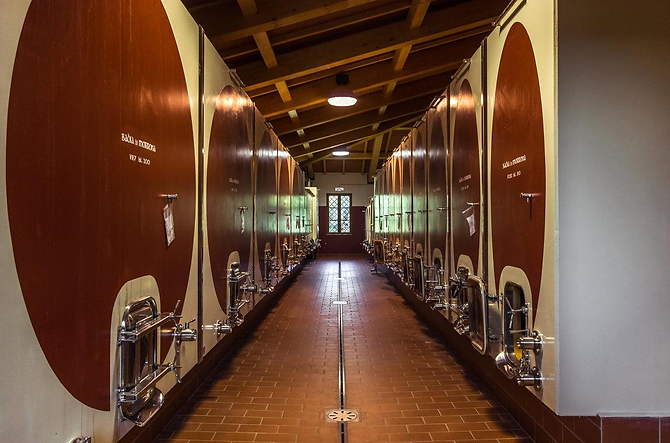
Concrete tanks can initially be confusing.
Some look like giant square swimming pools.
Others look like enormous eggs.
Unlike stainless steel, concrete can allow a very small degree of interaction between the wine and oxygen, depending on construction and coating, without adding the obvious woody flavors associated with oak.
Its thick walls also provide excellent thermal stability.
Why Ferment Wine in Concrete?
Concrete can combine some of the advantages of stainless steel and wood.
The winemaker gets a relatively neutral vessel without strong oak flavor while potentially allowing gentle oxygen interaction and developing additional texture.
You'll sometimes see concrete eggs.
Their shape isn't simply for appearance. Fermentation and temperature differences can create natural convection currents inside the egg, keeping wine and fine sediment moving without mechanical stirring. Winemakers using them often seek additional texture and mouthfeel.
Concrete for Aging
Concrete can allow wine to develop while maintaining fruit and terroir character without overlaying those characteristics with vanilla or toasted oak.
What Might You Taste?
Compared with stainless steel, you may notice:
more texture • rounder mouthfeel • greater depth
without necessarily thinking:
"This tastes like oak."
Research presented through the International Organisation of Vine and Wine has even compared Sangiovese aged in stainless steel, coated and uncoated concrete, earthenware amphora and oak, finding measurable chemical and sensory differences among the vessels.
For the traveler, the simpler lesson is:
The container matters—even when it doesn't add an obvious flavor.
Terracotta & Amphora: Tuscany Reaches Back in Time

This may be the most visually fascinating vessel you'll encounter.
Terracotta wine vessels connect modern Tuscan winemaking with methods that stretch back thousands of years.
You'll hear several terms used around clay vessels, including:
amphora • terracotta • clay • earthenware
They're related, although the exact material, shape, lining and production method can vary.
Terracotta is particularly interesting in Tuscany because it isn't merely an imported winemaking trend. The region has a deep tradition of terracotta production, especially around Impruneta near Florence.
Why Ferment Wine in Terracotta?
Clay vessels don't contribute oak flavors, but depending upon how they're produced or lined, they can permit a degree of oxygen exchange.
Winemakers may choose them when they want:
fruit purity • texture • gentle oxygen exposure • minimal added flavor
Some producers also ferment wine on the grape skins in amphora for extended periods.
At Fontodi in Panzano, for example, Sangiovese has been fermented and macerated for months in large terracotta amphorae before remaining in amphora for additional maturation.
Terracotta for Aging
Wine can remain in amphora after fermentation rather than being transferred to oak.
That allows the winemaker to develop the wine without adding the recognizable flavors associated with a wooden barrel.
What Might You Taste?
Rather than looking for a specific "terracotta flavor," think:
texture, purity, earthiness and an unmasked expression of the fruit.
When you see amphorae during a Tuscany winery visit, ask:
"Does the wine ferment in these, age in these—or both?"
The answer can be fascinating.
Oak: Where Things Get More Complicated—and More Interesting
Oak isn't simply "oak."
The size of the barrel, age of the barrel, origin of the wood and amount of toasting can all influence the wine.
And Tuscany provides some wonderful examples.
Large Oak Botti
Walk into a traditional Brunello cellar and you may see enormous wooden vessels called botti.
These can hold thousands of liters of wine.
Because a large barrel contains much more wine relative to its wood surface area, it generally contributes less obvious oak character than a small barrel.
That's important.
The purpose isn't necessarily to make the wine taste woody.
The wine can slowly mature while Sangiovese remains the star.
Large traditional barrels are especially associated with Brunello producers.
Some wineries use enormous Slavonian oak botti, a style deeply connected with traditional Italian winemaking.
What Might You Taste?
Think:
more developed fruit • softened tannins • greater complexity • subtle spice
rather than strong vanilla or toast.
Barriques: Small Barrels, Bigger Influence
A traditional barrique holds about 225 liters.
Compare that with a botte holding several thousand liters.
Suddenly each liter of wine in the barrique has considerably more contact with wood.
That changes things.
Small barrels can contribute more:
vanilla • toast • spice • cedar • smoke • structure
depending on the wood and how the barrel was made.
Barriques are particularly associated with French oak, although other oak origins are possible.
They're also important to the history of many modern-style Tuscan and Super Tuscan wines.
But remember:
Oak influence depends enormously on whether the barrel is new or previously used.
A brand-new barrel contributes substantially more oak character.
An older barrel becomes increasingly neutral.
Tonneaux: Somewhere in the Middle
You may also hear the word tonneau during winery tours.
These barrels are larger than the classic 225-liter barrique—commonly around 500 liters, although sizes vary.
That creates something of a middle ground.
The wine receives the benefits of maturation in wood, but because there's less wood surface relative to the amount of wine, the oak influence can be gentler than in a small barrique.
For winemakers, vessel size becomes another tool.
Smaller barrel → generally more wood influence.
Larger barrel → generally less wood influence.
That simple rule will help you understand a surprising amount of what you're seeing inside Tuscan cellars

French Oak vs. Slavonian Oak: Does the Wood Matter?
Absolutely.
You'll frequently encounter these two terms in Tuscany.
French Oak
French oak is commonly associated with tighter grain and is widely used for barriques and tonneaux as well as larger vessels.
Depending upon the forest, grain, toast level and age of the barrel, it can contribute aromas and flavors such as:
vanilla • baking spice • cedar • toast • smoke
Some Tuscan producers use small French oak barrels when they want greater oak integration, structure and polish.
Slavonian Oak
Slavonian oak comes primarily from forests in Croatia and surrounding areas and has a long history in Italian winemaking.
In Tuscany, you'll see it particularly in large traditional botti.
Because these vessels are usually much larger than barriques—and are often reused for years—the goal generally isn't to make Sangiovese taste like wood.
Instead, they allow the wine to mature slowly while preserving more of its traditional character.
This is one reason you'll frequently encounter enormous Slavonian oak barrels when touring Montalcino.
What About American Oak?
American oak is another important barrel material in the global wine world, although you'll encounter French and Slavonian oak more frequently when exploring traditional Tuscan cellars.
American oak tends to have a more pronounced aromatic personality and can contribute notes often described as:
vanilla • coconut • sweet spice • dill
It's another reminder that saying a wine was "oak aged" doesn't tell you the entire story.
Ask:
What kind of oak?
How big is the barrel?
Is it new or used?
How long does the wine stay there?
Those four questions tell you much more.

Can Wine Ferment in Wood?
Yes.
Not every wooden vessel exists solely for aging.
Some producers ferment wine directly in wooden vats or barrels.
Wood fermentation can allow controlled oxygen interaction during fermentation and can begin integrating the wine with the vessel from the very beginning.
You may therefore encounter wineries using:
stainless fermentation → oak aging
or
concrete fermentation → oak aging
or
wood fermentation → wood aging
or
terracotta fermentation → terracotta aging.
And occasionally something more complicated than all of them.
That's why asking about the winemaking process during a tasting is so worthwhile.
What About Glass, Ceramic and Other Vessels?
Winemaking continues to evolve.
Beyond stainless steel, concrete, terracotta and oak, producers around the world are experimenting with vessels made from glass, ceramic/stoneware and other relatively neutral materials.
Glass is particularly interesting because it is essentially impermeable and flavor-neutral, allowing producers to mature wine without adding wood character.
These alternatives aren't what define traditional Tuscan winemaking, but don't be surprised if you eventually encounter something unusual in an innovative winery.
Modern cellars increasingly look less like:
"Which vessel is best?"
and more like:
"Which vessel is best for this particular wine?"
Why Would a Winemaker Use More Than One?
This is where winemaking begins feeling less like a recipe and more like cooking.
Imagine a chef with different pans, ovens and temperatures.
Winemakers have different vessels.
They may ferment Sangiovese in concrete because they want temperature stability and purity.
Then transfer it into large oak botti because they want slow maturation without overwhelming the fruit.
Another producer might ferment in stainless steel and then age in smaller French oak barrels because they're seeking greater richness and oak influence.
Another might ferment and age entirely in amphora because they want minimal influence from wood.
Some wineries even age different vineyard lots or grape varieties separately in different vessels and blend them later.
The vessel isn't automatically an indication of quality.
It's a tool.

What Does Aging Actually Do to Wine?
This may be the most important part.
Young red wine can be intense.
The fruit can be bright, the tannins firm, the acidity pronounced and the individual components somewhat separate.
Time allows those components to evolve.
During maturation, slow chemical reactions change the wine.
Tannins can polymerize and become less aggressive.
Fresh fruit aromas can evolve toward more complex secondary and tertiary characteristics.
Color changes.
Textures soften.
And the different elements of the wine begin to feel more integrated.
A young Sangiovese might remind you of:
fresh cherry • red berries • violets
As it matures, you may begin finding:
dried cherry • leather • tobacco • herbs • earth • spice • forest floor
Oak aging can contribute another layer of development through controlled oxygen exposure as well as compounds extracted from the wood.
But there's a balance.
The goal of aging isn't simply:
older = better.
Some wines are deliberately made to capture youthful fruit and freshness.
Others—Brunello being the obvious Tuscan example—are constructed around substantial maturation before release.
Brunello di Montalcino, for example, is legally required to spend at least two years in oak and additional time in bottle before release.
That's one reason a young Brunello and a young, fresh Sangiovese can seem like completely different wines even though they originate from the same grape variety.
Don't Forget Bottle Aging

Once the cork goes in, wine doesn't simply freeze in time.
Bottle aging is another stage of maturation.
The environment is now very different from a barrel or porous vessel. Oxygen exposure becomes extremely limited, and the wine continues developing through slow chemical reactions.
Fruit aromas can evolve.
Tannins can soften further.
The different components continue integrating.
Complex aged aromas may emerge.
This is why Brunello regulations require bottle maturation as part of the production process, and why many serious Tuscan producers hold wines in their cellars before releasing them.
And it gives you another great question during a tasting:
"How long did this wine age in the vessel—and how long in the bottle?"
The Best Way to Understand Fermentation and Aging? Taste Them Side by Side

You can read about stainless steel, concrete, amphora and oak all day.
Then you'll visit one winery and learn more in 20 minutes.
If possible, look for a tasting where the producer offers wines made using different methods.
Taste a fresh Sangiovese made primarily in stainless steel.
Then one matured in concrete.
Try an amphora-aged Sangiovese.
Then taste one aged in a large traditional botte.
Finally, try something matured in smaller French oak.
Don't worry about deciding which method is "best."
Ask yourself something much simpler:
Which one do I like?
Then ask the winemaker how they made it.
Suddenly those giant silver tanks, concrete eggs, terracotta amphorae and enormous wooden barrels you've been photographing throughout Tuscany begin to make sense.
They're not simply part of the scenery.
They're part of the wine you're drinking.
Discover all of Tuscany's wineries here. Maps, Amenities per Winery with Current Pricing

