Val d'Orcia : la route des vins la plus paisible et la plus belle de Toscane

Pourquoi le Val d'Orcia est l'une des plus belles régions de Toscane
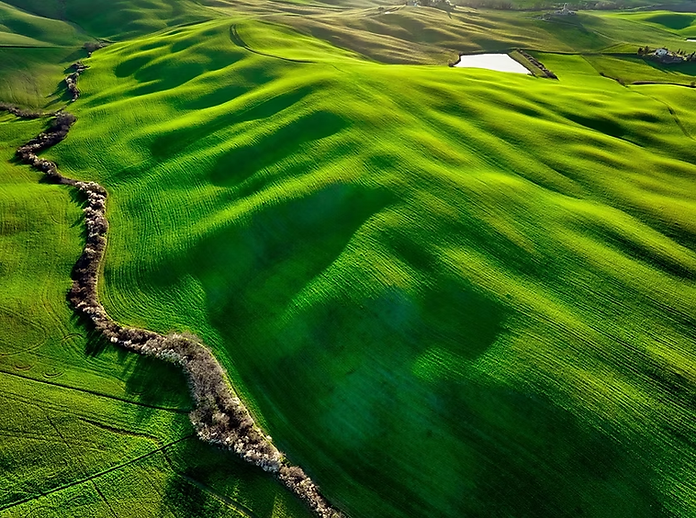
Le Val d'Orcia se situe au sud de la Toscane, entre Sienne et le Monte Amiata , et abrite quelques-unes des villes les plus emblématiques de la région : Pienza, Montalcino, San Quirico d'Orcia, Castiglione d'Orcia, Radicofani et Bagno Vignoni. Visit Tuscany classe ces villages parmi les incontournables du Val d'Orcia.
Le paysage est vaste et digne d'un film. Contrairement à certaines parties du Chianti , où les routes serpentent à travers des forêts denses et des vallées étroites, le Val d'Orcia offre une impression d'immensité. Les collines s'enchaînent en douceur. Des fermes se dressent solitaires sur les crêtes. Les cyprès marquent les allées comme des points d'exclamation. Au coucher du soleil, toute la vallée se pare d'or, de rose et d'argent.
C'est le genre d'endroit où les meilleurs moments de voyage se produisent souvent entre les destinations.
Lieux incontournables du Val d'Orcia
Pienza
C'est l'une des villes les plus agréables à visiter ou à utiliser comme point de départ. Connue comme une « ville idéale » de la Renaissance, elle fut repensée au XVe siècle par le pape Pie II . Les voyageurs l'apprécient souvent pour son harmonieux équilibre entre beauté, panoramas, restaurants et facilité de déplacement à pied.
Empruntez le sentier panoramique derrière la ville, arrêtez-vous pour déguster du fromage pecorino et prenez le temps de flâner sans liste de choses à faire.
Saint Quirico d'Orcia
Plus petite et plus tranquille que Pienza , elle constitue une excellente étape centrale. Ses rues pavées, ses églises historiques, ses restaurants typiques et son accès facile aux routes les plus célèbres de la vallée en font un lieu de séjour idéal.
Bagno Vignoni
C'est l'un des villages les plus singuliers de Toscane. Au lieu d'une place traditionnelle, son centre est un vaste bassin thermal entouré de vieux bâtiments en pierre. Les visiteurs le décrivent souvent comme un lieu paisible, empreint d'une atmosphère unique dans la région.
Montalcino
Montalcino est le berceau du Brunello di Montalcino , l'un des vins italiens les plus prestigieux. La ville, perchée au-dessus des vignobles environnants, abrite une forteresse, des caves à vin, des restaurants et offre des panoramas à 360°.
Montepulciano
Montepulciano est une charmante ville perchée sur une colline, réputée pour son Vino Nobile di Montepulciano . On y découvre plus facilement les vins à pied qu'à Montalcino, grâce à ses caves historiques et ses bars à vin situés en plein cœur de la ville.
Radicofani et Castiglione d'Orcia
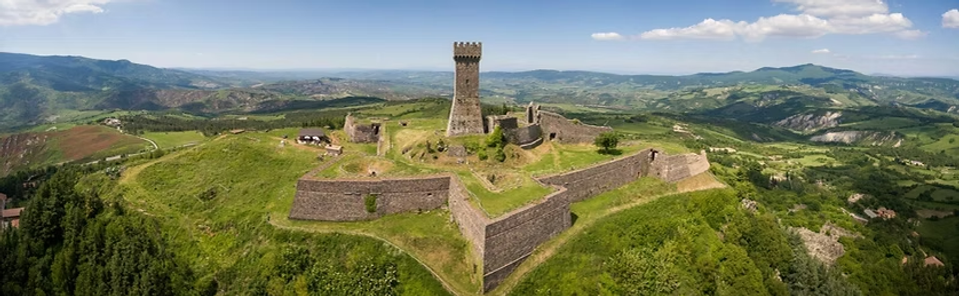
Ces villages, nichés au cœur du paysage, comblent les voyageurs en quête de tranquillité, de routes dégagées et de panoramas exceptionnels. Radicofani, avec sa forteresse, évoque les confins de la Toscane d'antan.
La scène des gladiateurs
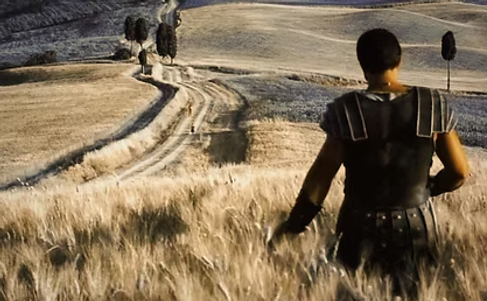
La région du Val d'Orcia, en Toscane, a servi de décor aux séquences oniriques de Maximus et aux scènes finales du film Gladiator (2000) . La route emblématique bordée de cyprès et les champs de blé « Élysée » se situent aux abords de Pienza, près de l' Agriturismo Terrapille . La maison de Maximus a été filmée au Podere di Poggio Manzuoli , situé à l'entrée de San Quirico d'Orcia.
Les Champs « Élysées » :
Situé à environ 3 km au sud de Pienza, sur la route de Terrapille , c'est là que les mains de Maximus effleurent le blé. L'endroit offre une vue imprenable sur la vallée.
La maison de Maximus :
Située juste à la sortie de San Quirico d'Orcia, le long de la SP146, il s'agit d'une ferme privée qui peut être admirée et photographiée depuis le bord de la route ou depuis le portail d'entrée.
Les plus beaux endroits pour prendre des photos dans le Val d'Orcia
Si vous avez déjà recherché « Toscane » sur Google, Instagram ou Pinterest, il y a de fortes chances que vous ayez déjà vu le Val d'Orcia, même sans en connaître le nom.
Nombre des paysages les plus emblématiques de la Toscane se concentrent sur une superficie étonnamment restreinte. Routes bordées de cyprès serpentant à travers les collines, chapelles isolées entourées de champs de blé, anciennes fermes en pierre perchées sur les crêtes et vignobles s'étendant jusqu'aux villages médiévaux sont devenus des symboles de l'Italie elle-même.
L'un des plus grands plaisirs de la découverte du Val d'Orcia réside dans la proximité de nombreux sites célèbres, accessibles en quelques minutes de voiture. Plutôt que de courir d'une ville à l'autre, prenez le temps d'admirer le lever du soleil, la lumière dorée du crépuscule et des panoramas à couper le souffle.
Voici six des lieux de photographie les plus emblématiques de Toscane.
Agriturismo Baccoleno



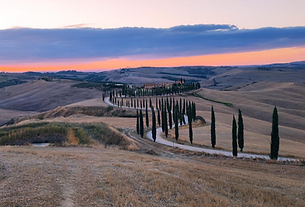

L'allée la plus célèbre de Toscane
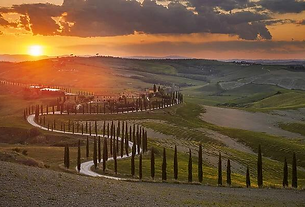
S'il est une photographie qui est devenue emblématique de la Toscane à travers le monde, c'est bien celle de l'allée sinueuse bordée de cyprès menant à l'Agriturismo Baccoleno.
La route de gravier serpente gracieusement à travers les collines avant d'arriver à une magnifique ferme en pierre entourée de vignes et de champs. Au lever du soleil, la douce lumière matinale projette de longues ombres sur les collines, faisant de ce paysage l'un des plus photographiés d'Italie.
Debout au belvédère juste après l'aube, le calme est surprenant. Seuls les chants d'oiseaux, une légère brise dans les champs de blé et, de temps à autre, le bruit discret d'un autre photographe installant son trépied, viennent troubler le silence. Observer la lumière se répandre lentement sur les collines est une expérience inoubliable, même après la prise des photos.
Où est-il?
Près d'Asciano, à environ 30 minutes au nord-est de Pienza.
Comment s'y rendre
Stationnez uniquement sur les aires de stationnement aménagées en bord de route. L'allée est une propriété privée réservée aux clients de l'agritourisme. Le point de vue emblématique est photographié depuis la voie publique.
Conseils de photographie
Idéal au lever du soleil
Le printemps offre des collines d'un vert éclatant
L'automne offre des champs dorés
Apportez un téléobjectif pour la perspective compressée classique
Cipressi de San Quirico d'Orcia


Le cercle de cyprès le plus reconnaissable de Toscane
Peut-être aucun groupe d'arbres n'a-t-il été autant photographié que les célèbres Cipressi di San Quirico d'Orcia.
Perché solitaire au sommet d'une douce colline, ce cercle de cyprès parfaitement agencés est devenu l'un des symboles de la Toscane. Le paysage se métamorphose au fil des saisons : des champs d'un vert éclatant au printemps, au blé doré en été et aux brumes matinales d'automne.
Emprunter le court sentier qui mène au bosquet permet de se rendre compte à quel point ce paysage est paisible.
Où est-il?
Juste à la sortie de San Quirico d'Orcia sur la SP146.
Comment s'y rendre
Il est possible de se garer le long de la route, et la zone d'observation se trouve à quelques pas.
Meilleur moment
Lever du soleil
Coucher de soleil
Matins d'automne brumeux
Chapelle de la Madone de Vitaleta
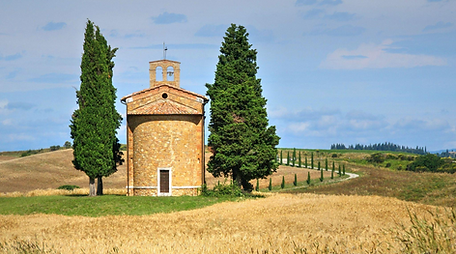


La chapelle de conte de fées de Toscane
Cachée au cœur des collines ondulantes entre Pienza et San Quirico se trouve l'une des plus charmantes petites églises d'Italie.
La chapelle de la Madonna di Vitaleta semble presque trop parfaite pour être vraie. Entourée de champs de blé, de vignes et de rangées de cyprès, elle correspond exactement à l'image que les artistes se font de la Toscane depuis des siècles.
La marche jusqu'à la chapelle fait partie intégrante de l'expérience. Quittant la route, le paisible chemin de campagne dévoile peu à peu l'église, avec le mont Amiata en toile de fond.
Où est-il?
Entre Pienza et San Quirico d'Orcia.
Comment s'y rendre
Garez-vous près du parking en bord de route et profitez d'une promenade pittoresque de 15 à 20 minutes le long d'un sentier de gravier bien balisé.
Conseils de photographie
Lever du soleil
Coucher de soleil
fleurs sauvages printanières
Objectif long pour des vues compressées

Palazzo Massaini

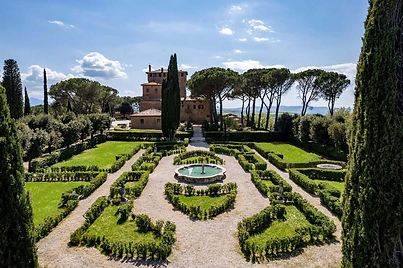
Vue imprenable sur les vignobles
Contrairement à de nombreux points de vue célèbres, le Palazzo Massaini offre une combinaison de vignobles, de cyprès, de collines ondulantes et d'une architecture élégante.
Le domaine est devenu de plus en plus populaire auprès des photographes car presque chaque direction offre une composition digne d'une carte postale.
Même si vous ne faites que traverser la région en voiture, vous vous retrouverez probablement à vous arrêter plusieurs fois le long des routes environnantes.
Où est-il?
Juste à l'extérieur de Pienza, en direction de Montepulciano.
Comment s'y rendre
Accessible par les routes publiques qui entourent le domaine.
Les meilleures photos sont généralement prises depuis les aires de stationnement en bord de route plutôt qu'à l'intérieur de la propriété.
Agriturismo Poggio Covili


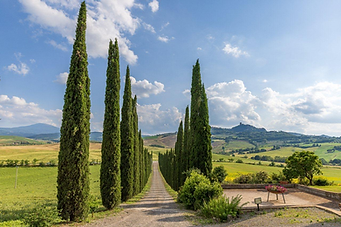

Un joyau caché que peu de touristes connaissent
Alors que de nombreux visiteurs se dirigent directement vers Baccoleno, les photographes recherchent souvent l'Agriturismo Poggio Covili pour ses paysages tout aussi magnifiques, mais avec beaucoup moins de monde.
L'alliance de routes de campagne sinueuses, de vignobles, d'oliveraies et de fermes toscanes traditionnelles fait de cet endroit l'un des lieux de photographie les plus paisibles du Val d'Orcia.
Ici, l'heure dorée est merveilleusement paisible.
Où est-il?
Près de San Quirico d'Orcia.
Comment s'y rendre
Accessible par les routes de campagne locales. Veuillez respecter la propriété privée et prendre des photos depuis les points de vue publics, sauf si vous séjournez à l'agriturismo.
La route sinueuse des cyprès
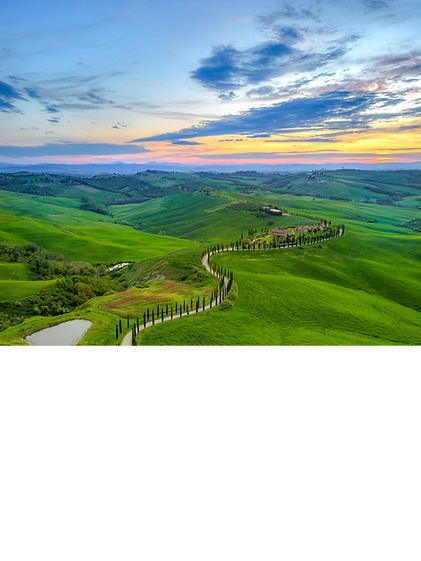


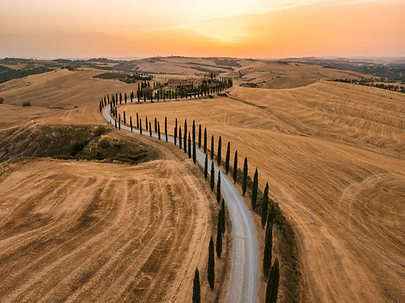
La route sinueuse la plus célèbre de Toscane
Peu de routes ont figuré aussi souvent sur les cartes postales, les calendriers et les magazines de voyage que la route sinueuse bordée de cyprès du Val d'Orcia.
Ses courbes gracieuses en forme de S serpentent entre les collines ondulantes avant de se perdre à l'horizon sous des cyprès parfaitement espacés. Au lever et au coucher du soleil, la lumière rasante crée des ombres spectaculaires qui transforment le paysage en l'un des plus emblématiques de la Toscane.
Nombreux sont les visiteurs qui la reconnaissent immédiatement grâce aux films, aux documentaires de voyage et aux réseaux sociaux, mais la voir en personne est encore plus époustouflant. Observer la lumière changeante balayer les collines depuis le bord de cette route mythique est un de ces rares moments de voyage que les photos ne peuvent qu'en partie saisir.
Où est-il?
Près de Monticchiello, entre Pienza et San Quirico d'Orcia.
Comment s'y rendre
Les plus beaux points de vue sont accessibles par la SP88 et les routes de campagne avoisinantes. Plusieurs aires de stationnement sécurisées permettent de s'arrêter brièvement pour admirer le paysage et prendre des photos. Arrivez tôt le matin ou au crépuscule pour éviter les embouteillages et profiter d'une lumière optimale.
Conseils de photographie
Le lever du soleil offre une lumière douce et attire moins de visiteurs.
L'heure dorée qui précède le coucher du soleil projette de longues ombres sur les collines.
Un drone (lorsque la loi le permet) ou un téléobjectif révèle les courbes spectaculaires de la route.
Le printemps (avril-mai) et le début de l'été offrent les paysages verdoyants et luxuriants que l'on associe le plus à la photographie classique de la Toscane.
Conseil du photographe
Ces six sites sont tous situés à une distance relativement courte en voiture les uns des autres, ce qui permet de les combiner facilement en un itinéraire panoramique d'une journée. Commencez avant le lever du soleil à l'Agriturismo Baccoleno, visitez les cyprès de San Quirico d'Orcia dans la matinée, marchez jusqu'à la chapelle de la Madonna di Vitaleta, savourez un déjeuner accompagné de vin à Pienza, explorez le Palazzo Massaini et l'Agriturismo Poggio Covili dans l'après-midi, et terminez votre journée sur la Route des Cyprès pour un coucher de soleil spectaculaire. C'est l'un des itinéraires photographiques les plus enrichissants de toute la Toscane.
Meilleure façon de voyager à travers le Val d'Orcia

Le meilleur moyen d'explorer le Val d'Orcia est en voiture.
Ce n'est pas une région où l'on a envie de dépendre des taxis, des VTC ou des horaires de train stricts. Le charme du Val d'Orcia réside dans la liberté de s'arrêter pour prendre une photo, d'emprunter une petite route de campagne, de visiter un domaine viticole ou de s'attarder pour déjeuner.
Roulez prudemment. Les routes peuvent être étroites, sinueuses et parfois de gravier. Parmi les plus belles routes de vignobles, on trouve les strade bianche (chemins de gravier blanc) qui traversent oliveraies, vignes et champs. Les circuits œnologiques locaux à Montalcino mettent souvent en avant ces petites routes de campagne comme faisant partie intégrante de l'expérience authentique du Brunello .
Pour une dégustation de vins, le plus sûr est de faire appel à un chauffeur privé, de choisir un ou deux domaines viticoles proches de votre hébergement, ou de désigner une personne pour conduire et déguster légèrement. Les visites de domaines durent souvent plus longtemps que prévu, surtout lorsque le propriétaire ou le guide se met à raconter l'histoire du terroir.

Où séjourner : Les meilleurs camps de base du Val d'Orcia

Pienza : Meilleure base globale
Pienza est idéale pour une première visite. Belle et centrale, elle offre suffisamment d'animation pour ses restaurants et ses promenades en soirée, tout en conservant une atmosphère paisible. Elle convient particulièrement aux couples et aux voyageurs en quête de beaux paysages, de gastronomie et d'un accès facile à Montalcino et Montepulciano.
San Quirico d'Orcia : meilleure base routière centrale
San Quirico est un point de départ idéal pour explorer la vallée. Proche de Pienza, Bagno Vignoni, Montalcino et des célèbres routes bordées de cyprès, c'est un excellent choix si vous privilégiez les balades pittoresques en voiture.
Montalcino : La meilleure base pour les amateurs de Brunello
Si votre principale motivation pour visiter Montalcino est le Brunello, logez à Montalcino ou dans les environs. De nombreux domaines viticoles exigent une réservation, et les distances entre eux peuvent être plus importantes qu'il n'y paraît sur une carte. En séjournant à proximité, vous pourrez prendre votre temps et éviter de courir d'une dégustation à l'autre.
Montepulciano : Meilleure base pour les dégustations sans réservation
Montepulciano est un excellent point de départ pour découvrir le vin, les restaurants et l'animation d'une ville sans avoir à prendre la voiture à chaque déplacement. Plusieurs caves de dégustation et des chais historiques se trouvent en ville ou à proximité, ce qui permet de profiter pleinement des vins sans avoir à planifier chaque étape à l'avance.
Un blogueur adepte du slow travel décrivait Montepulciano comme un point de départ idéal car la ville offre une ambiance chaleureuse, des restaurants, des boutiques et des excursions d'une journée enrichissantes, tout en conservant l'atmosphère d'un véritable village.
Séjour en agritourisme : idéal pour les familles et les adeptes du tourisme lent.
Pour une immersion totale dans le Val d'Orcia, séjournez dans un agriturismo ou une ferme viticole. Vous profiterez ainsi du lever et du coucher du soleil sur la campagne, d'un espace pour les enfants, d'un stationnement plus facile, de produits locaux et du sentiment de faire partie intégrante du paysage plutôt que de simplement le traverser.

Pour en savoir plus sur les agritourismes de Toscane, cliquez ici.

Montalcino : Pays du Brunello

Montalcino est une destination viticole majeure en Italie. Son vin emblématique, le Brunello di Montalcino DOCG, est élaboré à partir de Sangiovese cultivé aux alentours de la ville. Le Consortium Brunello le décrit comme un vin à la robe grenat, élégant, structuré, sec et persistant, présentant souvent des notes de fruits rouges, de bois aromatique, de sous-bois, de vanille et de confiture.
Vins à découvrir à Montalcino

Les principaux vins de Montalcino comprennent :
Brunello di Montalcino DOCG — le vin phare, structuré, de garde et idéal pour les longs repas.
Rosso di Montalcino DOC — plus jeune, plus frais, plus accessible et souvent un excellent choix pour le déjeuner.
Brunello Riserva — commercialisé uniquement après un vieillissement plus long et généralement à partir de millésimes sélectionnés.
Les vins Sant'Antimo DOC et IGT offrent souvent aux producteurs une plus grande flexibilité en matière d'assemblages et de styles.
À quoi ressemble une visite de vignoble à Montalcino ?

À Montalcino, la visite des domaines viticoles offre souvent une expérience intime et profondément liée au terroir. Nombre d'entre eux sont de petite taille ou familiaux, et une dégustation peut facilement déboucher sur une discussion animée autour du sol, de l'altitude, du millésime, des vendanges, du chêne et de l'histoire familiale.
Les récits de visiteurs évoquent fréquemment le contraste entre les petits producteurs familiaux et les grands domaines plus sophistiqués. La description d'une excursion à Brunello incluait la visite de deux domaines : une petite exploitation familiale et un domaine plus grand et plus raffiné, les deux visites étant guidées par les propriétaires, suivies d'un déjeuner avec vue sur les vignes.
C’est ce mélange qui fait la singularité de Montalcino. On peut visiter un domaine renommé avec ses élégants espaces de dégustation, puis emprunter un chemin de gravier jusqu’à une ferme où la personne qui sert le vin est peut-être aussi celle qui a taillé les vignes.

Guide des vignobles de Toscane

Découvrez les 150 domaines viticoles répartis dans 6 régions, avec des cartes récapitulatives des services proposés et les tarifs 2026. Cliquez ici.

Montepulciano : Vino Nobile et caves historiques
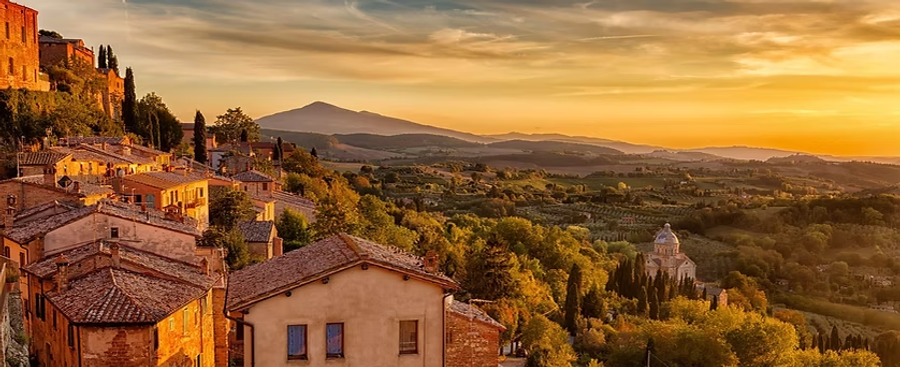
Le Montepulciano est parfois confondu avec le cépage Montepulciano des Abruzzes, mais le Vino Nobile di Montepulciano est un vin toscan de la ville de Montepulciano, traditionnellement à base de Sangiovese, localement connu sous le nom de Prugnolo Gentile.
Le Consorzio Vino Nobile di Montepulciano a été fondé en 1965 afin de protéger et de promouvoir le Vino Nobile, le Rosso di Montepulciano et le Vin Santo. Visit Tuscany décrit le Vino Nobile comme un vin à la robe rubis à grenat qui évolue avec l'âge, aux arômes intenses et au goût sec, persistant et équilibré.
Les vins à connaître à Montepulciano
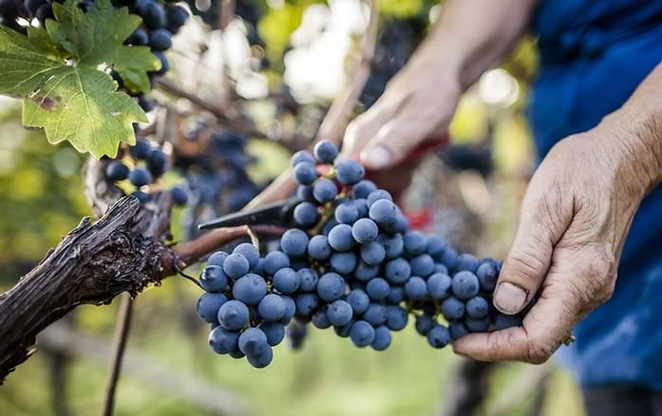
Vino Nobile di Montepulciano DOCG — structuré, élégant et souvent plus accessible que le Brunello dans sa jeunesse.
Rosso di Montepulciano DOC — frais, polyvalent, idéal pour accompagner les repas et excellent pour les dégustations informelles.
Vino Nobile Riserva — vieilli plus longtemps, généralement plus profond et plus complexe.
Vin Santo — un vin de dessert toscan traditionnel, souvent servi avec des cantucci.
À quoi ressemble une visite de vignoble à Montepulciano ?

Montepulciano est l'une des meilleures villes de Toscane pour allier dégustation de vins et randonnées. Vous pourrez y déguster des vins dans des caves historiques creusées sous les palais, visiter l'œnologie de la forteresse ou explorer les vignobles de la campagne environnante.
L'Enoliteca, gérée par le Consortium Vino Nobile, est installée dans l'ancienne forteresse et offre une vue imprenable sur le temple de San Biagio, le Val di Chiana et le Val d'Orcia. C'est donc une excellente première étape pour découvrir la région avant de choisir un domaine viticole.
Comparée à Montalcino, Montepulciano paraît souvent plus accessible aux visiteurs occasionnels. On peut y faire davantage de dégustations et les distances entre les différentes expériences sont plus courtes.

Montalcino ou Montepulciano : lequel choisir ?

Choisissez Montalcino si vous souhaitez déguster du Brunello, faire des visites de caves approfondies, découvrir de petits domaines viticoles ruraux et profiter d'une journée œnologique sur réservation.
Choisissez Montepulciano si vous souhaitez découvrir une magnifique ville perchée sur une colline, des caves souterraines historiques, des dégustations sans réservation plus faciles et un équilibre entre vins, restaurants et boutiques.
Choisissez les deux si vous avez deux jours complets.
Ces deux sites sont suffisamment proches pour être visités ensemble lors d'un même voyage, mais chacun mérite d'être exploré à son propre rythme. Il est possible de les faire tous les deux en une seule journée, mais ce n'est pas l'idéal. Le Val d'Orcia n'est pas un endroit où la précipitation est de mise.
La lente beauté d’Il Dolce Far Niente

Le véritable atout du Val d'Orcia ne réside pas seulement dans ce que l'on voit, mais aussi dans la manière dont le paysage influence notre rythme de vie.
Le matin se lève sur les collines baignées d'une douce lumière. La route est silencieuse, hormis le crissement des graviers sous les pneus. On s'arrête pour une photo, puis une autre, et l'on réalise que le temps file déjà – et, d'une certaine façon, c'est bien ainsi.
Le déjeuner n'est pas une simple pause entre deux activités. Le déjeuner est une activité à part entière. Du pecorino de Pienza, des pici faits maison, un ragoût de sanglier, de l'huile d'olive, du pain et un verre de Rosso ou de Vino Nobile peuvent transformer une simple halte en un moment mémorable.
C'est le dolce far niente — non pas la paresse, mais le moment présent. S'asseoir sur un muret sans aucune obligation. Observer les ombres se mouvoir sur un vignoble. Laisser les enfants explorer le jardin d'une ferme. Discuter plus longtemps que prévu avec un vigneron. Commander un dessert, car la vue est trop belle pour partir.
Le Val d'Orcia rappelle aux voyageurs que chaque instant n'a pas besoin d'être rempli pour être significatif.
Itinéraire suggéré pour le Val d'Orcia
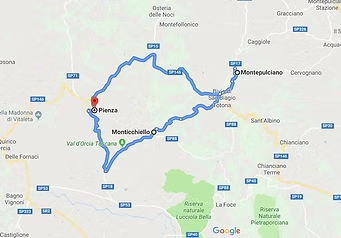
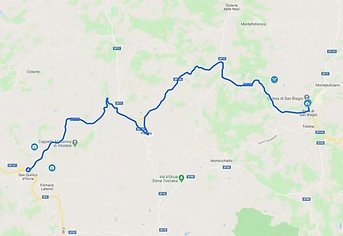
Jour 1 : Pienza, San Quirico et Bagno Vignoni
Commencez votre excursion à Pienza par une promenade en ville offrant une vue imprenable sur la vallée. Prenez ensuite la route vers San Quirico d'Orcia, en vous arrêtant régulièrement pour prendre des photos. Terminez l'après-midi à Bagno Vignoni par un apéritif tranquille au bord de la piscine thermale.
Jour 2 : Domaines viticoles de Montalcino et de Brunello
Passez la journée à Montalcino. Visitez un ou deux domaines viticoles (sur réservation), prévoyez du temps pour déjeuner et, si votre itinéraire le permet, arrêtez-vous à l'abbaye de Sant'Antimo. Ne surchargez pas votre programme : le Brunello mérite qu'on prenne le temps de s'y attarder.
Jour 3 : Montepulciano et Vino Nobile
Explorez Montepulciano à pied. Visitez une cave souterraine, dégustez du Vino Nobile, flânez jusqu'à la Piazza Grande et visitez l'Enoliteca ou un domaine viticole de la campagne. Terminez la journée par un dîner en ville ou une balade au coucher du soleil à travers la vallée.
Réflexions finales


Le Val d'Orcia est l'endroit idéal pour qui souhaite que la Toscane paraisse intemporelle.
Ce n'est pas la route des vins la plus rapide. Ce n'est pas non plus l'endroit le plus facile à cocher sur une liste à la hâte. Mais pour les voyageurs en quête de beauté, de vin, d'histoire, de fermes familiales, de routes panoramiques, de repas savourés et de l'impression d'être au cœur d'un tableau, le Val d'Orcia est sans doute la région la plus inoubliable de Toscane.
Venez pour la vue. Restez pour le vin. Gardez en mémoire les moments de calme entre les deux.